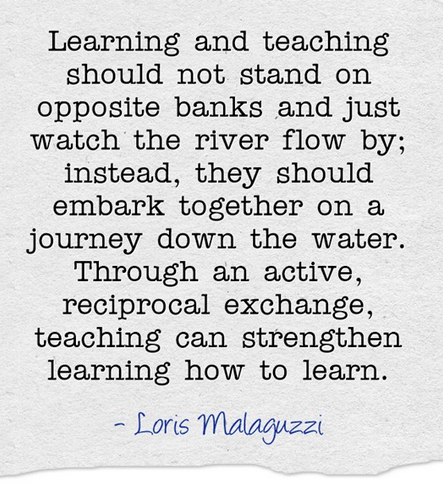
Thursday, January 14, 2016

Stepping In or Just Visiting?

One of the most asked frequently asked questions is,
"How do I know when and how to step into children's play and experiences without taking over?"

This is not an easy task and requires a great deal of thought and practice. Teachers are hard wired to teach, lead, and direct. 

Here are a few suggestions.

When you are walking through the classroom does anyone appear to need your support? 
If not, is there an conversation going on between children that could be a spark for a new exploration? This would be a good opportunity for you to step in and probe a little to see what their thinking is. You must tread carefully because your presence may change their play.
Often times just standing close by is enough for the children to invite you in.
These are golden moments.

With time you learn to read cues, see all things in unison, and know how to ask good questions, key components in working in an inquiry based classroom.

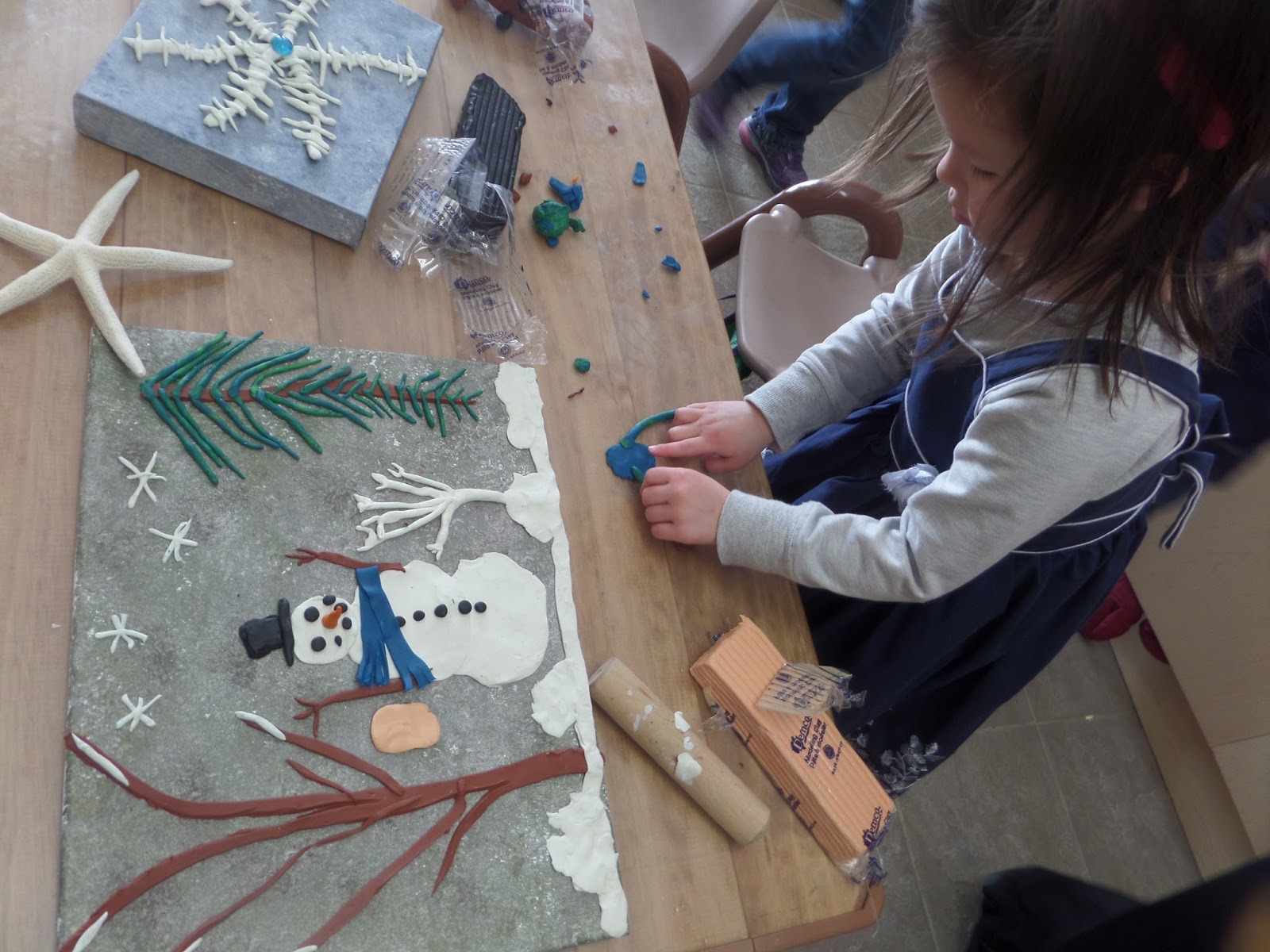
A child's simple story, a teacher's attentiveness and the collaboration of peers led to the making of this backdrop. A perfect scenario to tie literacy and art together.




Wednesday, January 6, 2016

How Teachers Reinvent Themselves


 When we reflect on teaching practices over the last hundred years, we recognize that, traditionally, the teacher's role has been to prepare lessons based on predetermined curriculum goals. For the most part many educational systems still function on this premise. This is not to say that there are not exceptional educational systems across the world that have broken this conventional mold.
In Ontario, The Child Care and Early Years Act, 2014, mandated child care centres to incorporate How Learning Happens, a plan with an articulate set of expectations to change the way teachers in preschool settings work with young children. Truth be told, much of the document reads like the Reggio Approach, it just finds different ways to express key principles.
Here are a few examples of the key elements I found embedded in the new document that are Reggio Inspired:

Respecting children as competent and capable contributors to the leaning process;

Respecting that children are citizens of the world who belong not only to a school community but the global community;

Respecting the rights of children to be in a space that is welcoming, engaging and offers them a sense of belonging and well being;

Understanding that teachers, children and their families work together toward common goals;

Understanding that a school that honours the right of children to explore their own interests, to construct and deconstruct their own theories, and respects their choices is truly supporting children’s life long dispositions to research, investigate, problem solve, be curious, inquisitive;

Understanding that teachers, like children, are life long learners and to this end they require ongoing dialogue with colleagues and opportunities for professional development;

Engaging children with a responsive, rich environment will support their
dispositions to explore, investigate, question, negotiate and discourse with their peers and teachers.

Now, the real work begins when you take each of these principles and put them into practice. They all overlap much like the colours of a kaleidoscope. No single
principle works alone. As teachers you must live and believe in these principles in order to integrate them into your practice.

So where to begin?

Look first to your current practices and what they are based on. It is here at the heart of your beliefs about teaching, children and the educational process that the most profound changes must take place. What is your image of the child?

Where do you see the families in this process and what are you willing to change to make it all come together in the spirit of true inquiry based learning?
 
Let us light the way just as these children lit the city at night!


Monday, September 28, 2015

The Hundred Languages of Teachers


We often reflect on The Hundred Languages of Children; the voices, competencies, manner in which children express their thoughts, theories and experiences.
But what of the teacher's languages, does she not have or require a hundred and a hundred more?

If we consider that each child learns in different ways then we must also consider that each teacher thinks and negotiates learning in different ways.
The truth is, and experience has taught me, that not every teacher can work in a Reggio Inspired, Inquiry Based, Emergent context.

I  know that this thinking is going to ruffle some feathers. None the less it is a serious consideration.
I have mentored teachers for over 30 years and I've come to realize that this type of context is not for every educator.
Reggio inspired teachers must think outside the box; see possibility in all materials; challenge themselves to be researchers; negotiators; to be reflective; introspective; to be prepared for the day;
to live in the moment with the children; to form meaningful relationships with children and co teachers based on a genuine commitment to the process of inquiry; to be respectful of the environment.
Perhaps, most of all, she must see her career, not as a job, but as an extension of life.

Only then will the truest nature of Reggio be made visible!


Friday, September 11, 2015

Welcome to a New School Year

Welcome to a new school year at Reggio Kids. It has been a very busy summer for us as we merged one of our schools. That however did not stave the flow of wonderful work. We look forward to sharing our many experiences with you as we move in new and exciting directions.