Monday, December 20, 2010

The Magic Of Christmas

The Polar Express


Needless to say this time of year is one of the best times to focus on stories. Not only reading them to the children but listening to the children tell their own as they become captivated by the festivities of the Holiday season.

In the Polar Express a young boy dares to believe in the magic of Christmas and so he climbs aboard an enchanted train that takes him to the North Pole where he receives the first gift of Christmas.

This group of SK children is busy at work making the backdrop for the class production of the Polar Express.

Tuesday, December 14, 2010

Can Toddlers Work with Symbol Systems?


Aidan clearly demonstrates that even children as young as two can work with loose materials to represent their thinking. After looking out the classroom window on a snowy day Aidan sits down to make this beautiful tree.
" A tree with snow, " he says with satisfaction as he gazes at his work.


Wednesday, December 8, 2010

From Brushstrokes to Winter Tree


With a paint brush in hand and a simple brush stroke technique this young girl transforms a blank canvas into a beautiful "Winter Tree."

Tuesday, December 7, 2010

The Fountain

A trip to Casa Loma sparked the Fountain Project.
The children were intrigued by the fountain in the Conservatory.
How did it work. Where did the water come from?
They had a few their theories of their own.
"The water comes from under the floor and gets pushed up."
"It comes from a pipe in the ground and then gets pushed through the spout."
"It comes from a hose."


A fountain was made using a variety of materials that the children selected. In this particular picture the children tested the hose theory. Naturally they enjoyed watching the water pour around the fountain. But what happened after the water was shut down puzzled them.
Why didn't the water recycle?
What was the missing element?
They decided to dismantle a real fountain to find out why.


Friday, December 3, 2010

Wiley Wire


Working with wire can be quite challenging as it tends to have a mind of its own. Now try asking a young child to make a wire figurine of her body in motion!

Wednesday, December 1, 2010

Literacy

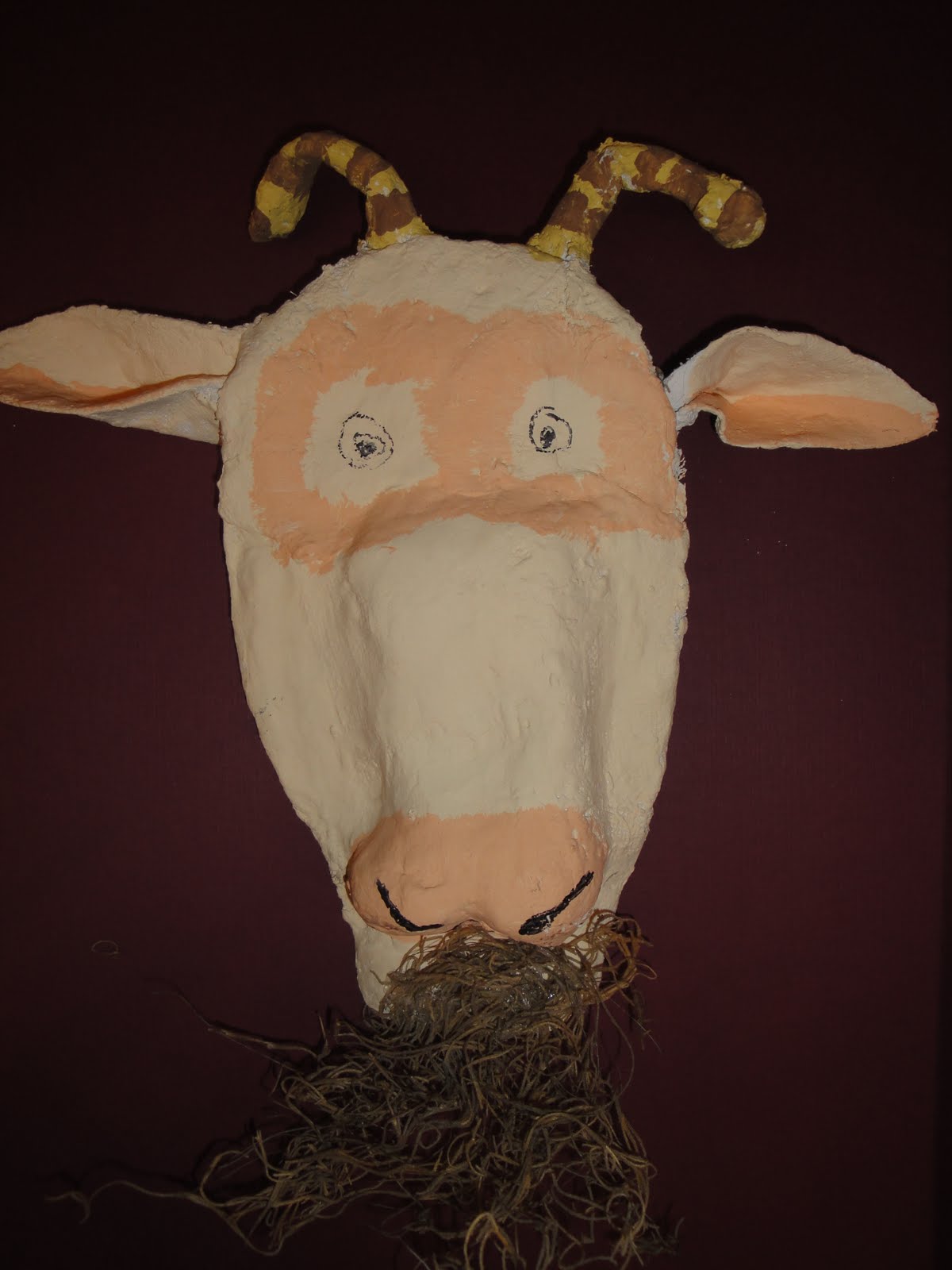
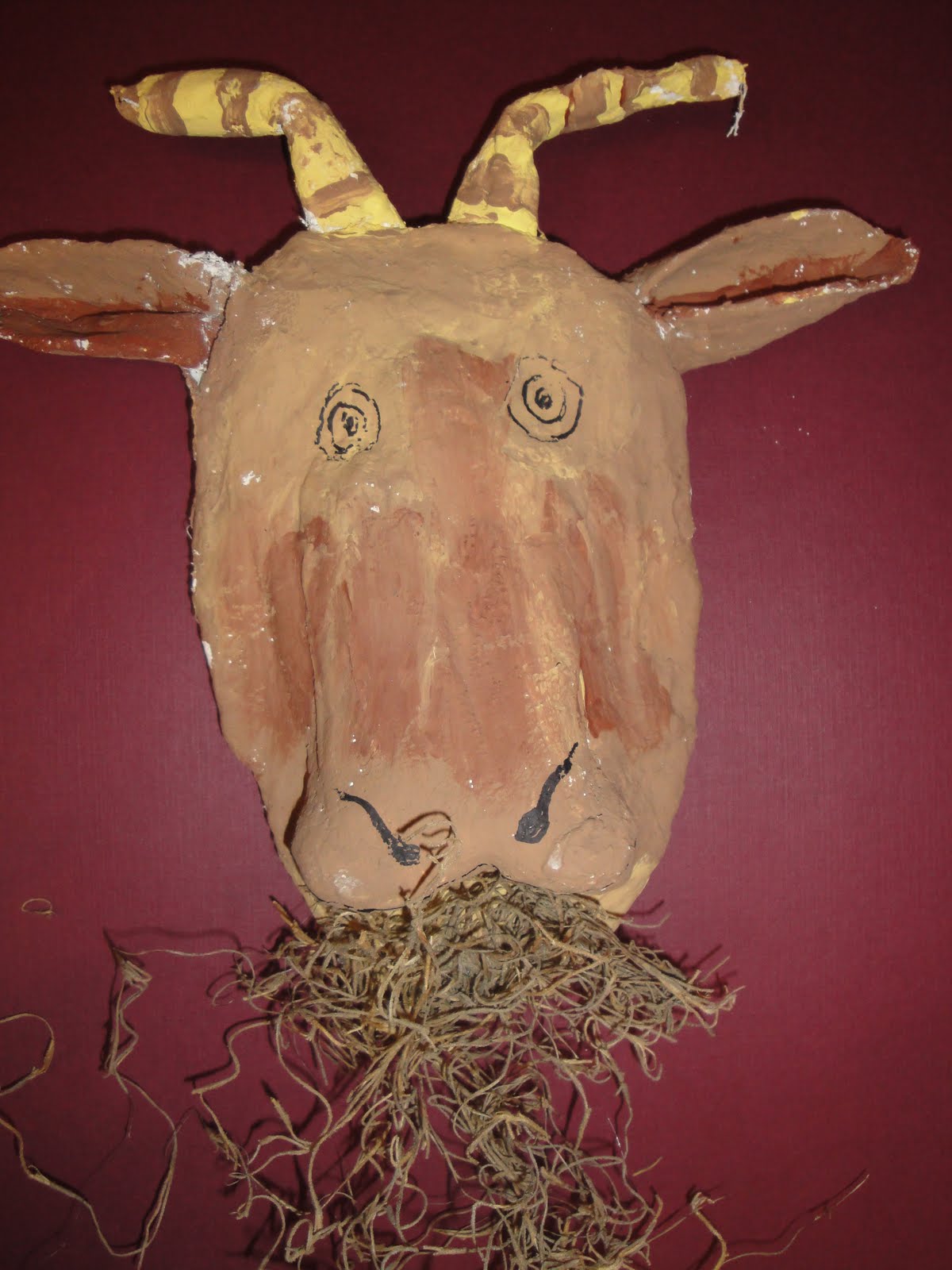
The Three Billy Goats Gruff


Literacy is more than the ability to read and write. It is the ability to attend to a story, to follow the elements of the story line; beginning, middle and end; to identify the characters; the setting, the morals of the story and to connect the story to real life experiences.
Our teachers strive to find innovative ways for their students to engage in the world of literary development.
These masks were made as part of the props for a production of The Three Billy Goat Gruff.

Tuesday, November 30, 2010

A Baby's First Encounter with Paint


The Art of Painting

Paint offers children an invitation to covey ideas, express emotions, explore colors, processes and causalities. Painting as an expression of pure form engages children’s minds providing an excellent opportunity for the development of symbolic communication.
While painting children are challenged to think as they analyze, and organize their experiences.
Often times they must reflect on their strokes and redesign their work as the paint proves to be an unpredictable medium full of surprises and uncertainties.

Monday, November 29, 2010

The Mascot


The children in this SK class were asked to select an animal to represent their soccer team.
Each child made a submission. The choices varied; a butterfly, snake, dog, cat etc.
A vote was taken and this Lion was selected.
Why?
He was considered the strongest of the animals, a leader, protector and champion.

Friday, November 26, 2010

Eden's Flower


The aim of every artist is to arrest motion, which is life, by artificial means and hold it fixed so that a hundred years later, when a stranger looks at it, it moves again since it is life.
~William Faulkner

Thursday, November 25, 2010

What Happens When You Provide Children with Accessories


Block play is one of the most powerful tools for constructing knowledge. It offers children the opportunity to physically and mentally engage while providing excellent large and small motor movement.
Blocks address all domains of child development; math, literacy, problem solving, social interaction. Through practice children learn weight and balance concepts, explore stability, and learn about geometry.
In fact, unit blocks, by their very name and design, teach math language and understanding. They also provide opportunities for counting and understanding quantity.
Through block play, children gradually learn elements of art, architecture and engineering as they make arches and doorways, stabilize structure height, make levers, distribute weight and create form.
Literacy is well encompassed in block play. Tales flow as children construct houses, towers, towns, buildings and imaginary places. Their creations take on a form of their own as children assume roles acting out characters in great detail and with much imagination. While interacting children develop social skills, learning to negotiate as well as value and respect the opinions and constructions of others.
When accessories are offered to the children, a new dimension is added to their work as noted in the attached photos.

Tuesday, November 23, 2010

The Voice of the Child

Children's Bill of Rights
What do you think of children? Are they participants or bystanders in the process of learning or for that matter in the journey called childhood.
It is our belief that children have a strong voice and much to say about their world.
This bill of rights was developed by a JK/SK class and their teachers.
Every child has the right to:

Be viewed as competent and
capable;
A loving, safe and nurturing
environment;
Equality and fairness;
Healthy food, clean air and a safe world;
Learn and experience;
Be understood;
Be respected as a competent participant in the learning process:

Blow bubbles;
Listen to the wind and thunder;
Be afraid;
Be joyful;
Grow bigger;
Cry;
Experience physical, and emotional well being;
Have empathetic teachers;
Express their feelings without fear;
Be a valued member of society;
Build self esteem through relationships;
Have competent, well educated teachers who work with children because they honour childhood; Imagine and pretend;
Play, run, and skip,
Sing, dance and somersault;
Walk in the rain and jump in puddles;
Wiggle his/her toes in the sand;
Catch bugs, dig for worms and pick apples;
Paint, colour, and explore;
Enjoy an unhurried childhood;
Roll in the snow, make snow
angels and catch snowflakes;
Live a long prosperous life
surrounded by family and friends.


Thursday, November 18, 2010

Should we Encourage Superhero Play?

Young children have minimum power over their own lives-as they live in an adult world of preset rules and guidelines for behaviour. Therefore it is easy to see why superheroes are so attractive to them. In the superhero world, they are the creators of the play, where they become the good guy who saves the day or the villain who frightens them.
Through Superhero play children see first hand the difference between right and wrong as Superheroes are by their very nature courageous and virtuous .
Often times children will use their superhero play to make sense of a confusing or frightening experience in their lives. As they work through the Superhero scenario, they gain insight into their own feelings and can better cope with their fears (the dark, the rain, bed time, a bully at school, the fire alarm system).

As children weave their Superhero tales they learn about
the development of a story line-the beginning(conflict), middle (the development of the conflict) and the end (resolution). Often times these tales develop in group format thus encouraging group skills, negations, compromise, cooperation, and respect for others ideas. Imagination explodes as children share ideas to further develop their plot.
Literacy skills improve as children find new words to describe their characters and develop their story line.
Other areas that are supported with this type of play;
Development of art skills as children design and create 3 dimensional characters using a variety of materials.
Little scientists emerge as children explore the properties of the elements they give their heroes powers such as fire, water and, wind.